Friday, January 10, 2025

Negligence per se - distracted driving


The legal doctrine of negligence per se simplifies proving fault in specific cases. Built upon the concept of breaching one’s duty, this principle applies when a person breaks a regulation designed to protect others. Unlike traditional negligence, where plaintiffs must show unreasonable behavior, negligence per se sets liability when a legal rule is broken.

To better understand negligence per se, consider distracted driving—a common hazard on the roads. Attorney Vince Sowerby, a respected attorney specializing in personal injury cases, explains that this issue is often an example of this doctrine. “When drivers text, eat, or engage in distractions while driving, they frequently violate traffic laws intended to prevent harm. That violation itself can constitute negligence per se.

### Understanding Its Distinction from General Negligence

Negligence per se removes the need for plaintiffs to establish that a reasonable person would act differently. In general negligence cases, proving liability involves showing these four elements:
1. **Duty of Care** – The defendant owed a duty to the plaintiff.
2. **Breach of Duty** – The defendant breached that duty.
3. **Causation** – The breach caused harm.
4. **Damages** – The plaintiff suffered losses.

With negligence per se, the law itself defines the duty. When someone violates it, they have breached their duty. Sowerby notes, “The legal violation serves as proof.”

### Distracted Driving: A Prime Example

Distracted driving laws offer a clear example. Many states prohibit phone use or require hands-free devices. These statutes exist to protect drivers and pedestrians.

Suppose a driver is texting and rear-ends another vehicle. If texting while driving is illegal, the injured party can invoke negligence per se to establish liability. This framework eliminates questions about reasonableness because the violation itself confirms negligence.

### The Legal Framework

For negligence per se to be valid, certain criteria must be met:
1. **Statutory Violation** – The defendant violated a specific law.
2. **Protected Class** – The law must aim to safeguard the injured party.
3. **Harm Alignment** – The harm caused must be the specific injury the rule addresses.
4. **Causation** – The violation caused the harm.

Distracted driving laws often meet these criteria. For example, anti-texting laws prevent collisions. When a driver violates these laws, their actions directly correlate to the harm caused.

### Why It Matters

Negligence per se streamlines the legal process, especially in situations involving statutory violations. For plaintiffs, it removes ambiguity, allowing them to address the harm suffered.

Attorney Vince Sowerby highlights the importance of understanding this legal tool. “Many people hesitate to file claims because they fear the complexity. Negligence per se removes much of the guesswork, particularly when laws have been violated outright.”

### Conclusion

Negligence per se ensures accountability when laws meant to protect others are ignored. Distracted driving shows how this doctrine works. Vince Sowerby advises using this principle to claim the damages they deserve, reinforcing the value of public safety.


Watch Video

Wednesday, January 1, 2025

Vince Sowerby Breaks Down Negligence Per Se and Driver Distraction


Negligence Per Se is a law principle that simplifies the process of proving negligence in specific circumstances. Unlike general negligence claims, where individuals must establish the defendant's obligation, breach, causation, and damages, negligence per se automatically presumes a responsibility and breach when particular legal violations occur.

In essence, negligence per se applies when a defendant violates a law or regulation designed to ensure public safety, and that violation clearly causes harm to a person the law was intended to protect. This legal principle serves as a shortcut, allowing judges to focus on causation and damages rather than debating whether the defendant acted negligently.

One of the most common examples of negligence per se is **distracted driving**, a behavior that has become increasingly prevalent with the rise of mobile devices and other distractions behind the wheel. Distracted driving laws, such as prohibitions against texting while driving, are designed to safeguard everyone on the road from avoidable accidents. When a person breaks these laws and causes an accident, they can be found automatically negligent.

### How Negligence Per Se Works

For negligence per se to be relevant, four elements must typically be met:
1. **The defendant violated a statute or regulation** – For instance, texting while driving goes against laws in most states.
2. **The law was enacted to prevent the type of harm that occurred** – Texting bans are intended to reduce car accidents caused by driver inattention.
3. **The plaintiff was among the group of people the law was designed to protect** – Road users, including drivers, passengers, cyclists, and pedestrians, are intended beneficiaries of distracted driving laws.
4. **The statutory violation caused the plaintiff’s injury** – A clear connection must exist between the violation and the harm, such as a crash caused by a driver who was texting.

When these criteria are met, the court presumes the defendant was negligent. This means the plaintiff doesn’t need to prove the defendant's behavior was careless—only that it broke a statute and caused harm.

### Distracted Driving as a Case Study

Consider this scenario: A driver checks their phone to read a text message, runs a red light, and crashes into another vehicle. The driver violated a traffic law designed to prevent accidents, and their behavior clearly caused harm. Under negligence per se, the injured party can argue that the statutory violation is enough to establish the driver’s negligence.


Watch Video

Vince Sowerby Explains Distracted Driving Laws and Negligence Per Se


Negligence per se is a legal doctrine that streamlines the procedure of proving negligence in specific circumstances. Unlike traditional negligence claims, where plaintiffs must establish the defendant's duty of care, breach, causation, and damages, negligence per se instantly presumes a duty and breach when particular legal violations occur.

In summary, negligence per se arises when a defendant breaks a law or regulation designed to protect the public, and that violation clearly causes harm to someone the law was intended to protect. This legal principle serves as a shortcut, allowing courts to focus on causation and damages rather than debating whether the defendant was at fault.

One of the most common examples of negligence per se is **distracted driving**, a behavior that has grown more common with the rise of mobile devices and other distractions behind the wheel. Distracted driving laws, such as prohibitions against texting while driving, are designed to safeguard everyone on the road from avoidable accidents. When someone breaks these laws and causes an accident, they can be found automatically negligent.

### How Negligence Per Se Works

For negligence per se to be relevant, four elements must generally be met:
1. **The defendant violated a statute or regulation** – For instance, texting while driving goes against laws in most states.
2. **The statute was enacted to prevent the type of harm that occurred** – Texting bans are intended to reduce car accidents caused by driver inattention.
3. **The plaintiff was among the group of people the law was designed to protect** – Road users, including drivers, passengers, cyclists, and pedestrians, are intended beneficiaries of distracted driving laws.
4. **The statutory violation caused the plaintiff’s injury** – A clear connection must be established between the violation and the harm, such as a collision caused by a driver who was texting.

When these criteria are met, the legal system presumes the defendant was negligent. This means the plaintiff doesn’t need to prove the defendant's behavior was careless—only that it broke a statute and resulted in harm.

### Distracted Driving as a Case Study

Consider this scenario: A driver checks their phone to read a text message, runs a red light, and crashes into another vehicle. The driver violated a traffic law designed to prevent accidents, and their behavior clearly caused harm. Under negligence per se, the injured party can argue that the statutory violation is enough to establish the driver’s negligence.


Watch Video

Tuesday, December 31, 2024

Vince Sowerby: Negligence Per Se and Distracted Driving in Focus


Negligence per se is a law principle that simplifies the process of proving negligence in specific circumstances. Unlike general negligence claims, where plaintiffs must establish the defendant's duty of care, breach, causation, and damages, negligence per se automatically presumes a responsibility and breach when specific legal violations occur.

In summary, negligence per se applies when a defendant breaks a law or regulation designed to protect the public, and that violation directly causes harm to someone the law was intended to protect. This doctrine serves as a shortcut, allowing judges to focus on causation and damages rather than debating whether the defendant acted negligently.

One of the clearest examples of negligence per se is **driver distraction**, a behavior that has grown more common with the rise of smartphones and other distractions behind the wheel. Distracted driving laws, such as prohibitions against texting while driving, are designed to protect everyone on the road from avoidable accidents. When a person violates these laws and causes an accident, they can be found automatically negligent.

### How Negligence Per Se Works

For negligence per se to be relevant, four factors must generally be met:
1. **The defendant broke a statute or regulation** – For instance, texting while driving goes against laws in most states.
2. **The statute was enacted to prevent the type of harm that occurred** – Texting bans are intended to reduce car accidents caused by driver inattention.
3. **The plaintiff was among the group of people the law was designed to protect** – Road users, including drivers, passengers, cyclists, and pedestrians, are intended beneficiaries of distracted driving laws.
4. **The statutory violation caused the plaintiff’s injury** – A direct connection must exist between the violation and the harm, such as a crash caused by a driver who was texting.

When these criteria are met, the legal system presumes the defendant was negligent. This means the plaintiff doesn’t need to prove the defendant's behavior was unreasonable—only that it violated the law and resulted in harm.

### Distracted Driving as a Case Study

Consider this scenario: A driver glances at their phone to read a text message, runs a red light, and crashes into another vehicle. The driver broke a traffic law designed to prevent accidents, and their behavior directly caused harm. Under negligence per se, the injured party can argue that the statutory violation is enough to establish the driver’s negligence.


Watch Video

Vince Sowerby Discusses How Negligence Per Se Applies to Distracted Driving


Negligence per se is a law principle that streamlines the procedure of proving negligence in certain circumstances. Unlike general negligence claims, where plaintiffs must establish the defendant's obligation, breach, causation, and damages, negligence per se instantly presumes a duty and breach when particular legal violations occur.

In essence, negligence per se applies when a defendant breaks a statute or regulation designed to protect the public, and that violation clearly causes harm to a person the law was intended to protect. This doctrine serves as a shortcut, allowing judges to focus on causation and damages rather than debating whether the defendant was at fault.

One of the clearest examples of negligence per se is **distracted driving**, a behavior that has grown more common with the rise of smartphones and other distractions behind the wheel. Distracted driving laws, such as prohibitions against texting while driving, are designed to safeguard everyone on the road from preventable accidents. When someone breaks these laws and causes an accident, they can be found negligent per se.

### How Negligence Per Se Works

For negligence per se to be relevant, four factors must generally be met:
1. **The defendant broke a law or regulation** – For instance, texting while driving violates laws in most states.
2. **The statute was enacted to prevent the type of harm that occurred** – Texting bans aim to reduce car accidents caused by driver inattention.
3. **The plaintiff was among the group of people the law was designed to protect** – Road users, including motorists, passengers, cyclists, and pedestrians, are intended beneficiaries of distracted driving laws.
4. **The statutory violation caused the plaintiff’s injury** – A clear connection must be established between the violation and the harm, such as a collision caused by a driver who was texting.

When these criteria are met, the legal system presumes the defendant was negligent. This means the plaintiff doesn’t need to establish the defendant's behavior was careless—only that it violated the law and caused harm.

### Distracted Driving as a Case Study

Imagine this scenario: A driver checks their phone to read a text message, runs a red light, and crashes into another vehicle. The driver broke a traffic law designed to prevent accidents, and their behavior clearly caused harm. Under negligence per se, the injured party can argue that the statutory violation is enough to establish the driver’s negligence.


Watch Video

Vince Sowerby’s Insights on Distracted Driving as Negligence Per Se


Negligence Per Se is a law principle that streamlines the process of proving negligence in certain circumstances. Unlike general negligence claims, where individuals must establish the defendant's obligation, breach, causation, and damages, negligence per se instantly presumes a responsibility and breach when particular legal violations occur.

In summary, negligence per se applies when a defendant breaks a statute or regulation designed to protect the public, and that violation directly causes harm to a person the law was meant to protect. This doctrine serves as a streamlined approach, allowing courts to focus on causation and damages rather than debating whether the defendant acted negligently.

One of the clearest examples of negligence per se is **driver distraction**, a behavior that has become increasingly prevalent with the rise of smartphones and other distractions behind the wheel. Distracted driving laws, such as prohibitions against texting while driving, are designed to protect everyone on the road from preventable accidents. When someone breaks these laws and causes an accident, they can be found negligent per se.

### How Negligence Per Se Works

For negligence per se to be relevant, four elements must typically be met:
1. **The defendant violated a statute or regulation** – For instance, texting while driving goes against laws in most states.
2. **The law was enacted to prevent the type of harm that occurred** – Texting bans aim to reduce car accidents caused by driver inattention.
3. **The plaintiff was among the group of people the law was designed to protect** – Road users, including drivers, passengers, cyclists, and pedestrians, are intended beneficiaries of distracted driving laws.
4. **The statutory violation caused the plaintiff’s injury** – A direct connection must be established between the violation and the harm, such as a crash caused by a driver who was texting.

When these criteria are met, the court presumes the defendant was negligent. This means the plaintiff doesn’t need to establish the defendant's behavior was careless—only that it broke a statute and resulted in harm.

### Distracted Driving as a Case Study

Imagine this scenario: A driver glances at their phone to read a text message, runs a red light, and crashes into another vehicle. The driver violated a traffic law designed to prevent accidents, and their behavior directly caused harm. Under negligence per se, the injured party can argue that the statutory violation is enough to establish the driver’s negligence.


Watch Video

Vince Sowerby Covers Negligence Per Se with a Focus on Distracted Driving


Negligence per se is a legal doctrine that streamlines the procedure of proving negligence in specific circumstances. Unlike traditional negligence claims, where plaintiffs must establish the defendant's duty of care, breach, causation, and damages, negligence per se automatically presumes a duty and breach when specific legal violations occur.

In summary, negligence per se arises when a defendant violates a statute or regulation designed to protect the public, and that violation directly causes harm to someone the law was intended to protect. This legal principle serves as a streamlined approach, allowing judges to focus on causation and damages rather than debating whether the defendant was at fault.

One of the most common examples of negligence per se is **driver distraction**, a behavior that has become increasingly prevalent with the rise of smartphones and other distractions behind the wheel. Distracted driving laws, such as prohibitions against texting while driving, are designed to protect everyone on the road from preventable accidents. When a person violates these laws and causes an accident, they can be found negligent per se.

### How Negligence Per Se Works

For negligence per se to be relevant, four elements must generally be met:
1. **The defendant broke a statute or regulation** – For instance, texting while driving violates laws in most states.
2. **The law was enacted to prevent the type of harm that occurred** – Texting bans are intended to reduce car accidents caused by driver inattention.
3. **The plaintiff was among the group of people the law was designed to protect** – Road users, including motorists, passengers, cyclists, and pedestrians, are intended beneficiaries of distracted driving laws.
4. **The statutory violation caused the plaintiff’s injury** – A direct connection must exist between the violation and the harm, such as a collision caused by a driver who was texting.

When these criteria are met, the court presumes the defendant was negligent. This means the plaintiff doesn’t need to establish the defendant's behavior was unreasonable—only that it violated the law and resulted in harm.

### Distracted Driving as a Case Study

Consider this scenario: A driver glances at their phone to read a text message, runs a red light, and collides with another vehicle. The driver broke a traffic law designed to prevent accidents, and their behavior clearly caused harm. Under negligence per se, the injured party can argue that the statutory violation is enough to establish the driver’s negligence.


Watch Video

Vince Sowerby Delves into Negligence Per Se and Driver Distraction


Negligence per se is a legal doctrine that simplifies the procedure of proving negligence in specific circumstances. Unlike traditional negligence claims, where plaintiffs must establish the defendant's obligation, breach, causation, and damages, negligence per se instantly presumes a responsibility and breach when specific legal violations occur.

In summary, negligence per se arises when a defendant violates a statute or regulation designed to protect the public, and that violation directly causes harm to someone the law was meant to protect. This legal principle serves as a shortcut, allowing judges to focus on causation and damages rather than debating whether the defendant acted negligently.

One of the most common examples of negligence per se is **driver distraction**, a behavior that has become increasingly prevalent with the rise of smartphones and other distractions behind the wheel. Distracted driving laws, such as prohibitions against texting while driving, are designed to protect everyone on the road from avoidable accidents. When someone violates these laws and causes an accident, they can be found negligent per se.

### How Negligence Per Se Works

For negligence per se to apply, four elements must generally be met:
1. **The defendant violated a law or regulation** – For instance, texting while driving goes against laws in most states.
2. **The law was enacted to prevent the type of harm that occurred** – Texting bans are intended to reduce car accidents caused by driver inattention.
3. **The plaintiff was among the group of people the law was designed to protect** – Road users, including motorists, passengers, cyclists, and pedestrians, are intended beneficiaries of distracted driving laws.
4. **The statutory violation caused the plaintiff’s injury** – A direct connection must be established between the violation and the harm, such as a crash caused by a driver who was texting.

When these criteria are met, the court presumes the defendant was negligent. This means the plaintiff doesn’t need to prove the defendant's behavior was careless—only that it broke a statute and caused harm.

### Distracted Driving as a Case Study

Imagine this scenario: A driver checks their phone to read a text message, runs a red light, and crashes into another vehicle. The driver violated a traffic law designed to prevent accidents, and their behavior directly caused harm. Under negligence per se, the injured party can argue that the statutory violation is enough to establish the driver’s negligence.


Watch Video

Monday, December 30, 2024

Vince Sowerby on Understanding Negligence Per Se and Distracted Driving


Negligence Per Se is a law principle that simplifies the procedure of proving negligence in certain circumstances. Unlike traditional negligence claims, where plaintiffs must establish the defendant's obligation, breach, causation, and damages, negligence per se automatically presumes a responsibility and breach when specific legal violations occur.

In essence, negligence per se arises when a defendant violates a statute or regulation designed to protect the public, and that violation clearly causes harm to someone the law was meant to protect. This doctrine serves as a streamlined approach, allowing judges to focus on causation and damages rather than debating whether the defendant acted negligently.

One of the clearest examples of negligence per se is **driver distraction**, a behavior that has become increasingly prevalent with the rise of smartphones and other distractions behind the wheel. Distracted driving laws, such as prohibitions against texting while driving, are designed to safeguard everyone on the road from preventable accidents. When a person breaks these laws and causes an accident, they can be found automatically negligent.

### How Negligence Per Se Works

For negligence per se to be relevant, four factors must typically be met:
1. **The defendant violated a statute or regulation** – For instance, texting while driving goes against laws in most states.
2. **The law was enacted to prevent the type of harm that occurred** – Texting bans aim to reduce car accidents caused by driver inattention.
3. **The plaintiff was among the group of people the law was designed to protect** – Road users, including motorists, passengers, cyclists, and pedestrians, are intended beneficiaries of distracted driving laws.
4. **The statutory violation caused the plaintiff’s injury** – A clear connection must be established between the violation and the harm, such as a crash caused by a driver who was texting.

When these criteria are met, the legal system presumes the defendant was negligent. This means the plaintiff doesn’t need to establish the defendant's behavior was unreasonable—only that it violated the law and resulted in harm.

### Distracted Driving as a Case Study

Imagine this scenario: A driver checks their phone to read a text message, runs a red light, and collides with another vehicle. The driver violated a traffic law designed to prevent accidents, and their behavior clearly caused harm. Under negligence per se, the injured party can argue that the statutory violation is enough to establish the driver’s negligence.


Watch Video

Thursday, December 26, 2024

Vince Sowerby Analyzes Distracted Driving as an Example of Negligence Per Se


Negligence Per Se is a law principle that simplifies the process of proving negligence in certain circumstances. Unlike general negligence claims, where individuals must establish the defendant's obligation, breach, causation, and damages, negligence per se instantly presumes a duty and breach when specific legal violations occur.

In summary, negligence per se arises when a defendant violates a law or regulation designed to protect the public, and that violation directly causes harm to a person the law was meant to protect. This legal principle serves as a streamlined approach, allowing judges to focus on causation and damages rather than debating whether the defendant acted negligently.

One of the most common examples of negligence per se is **distracted driving**, a behavior that has grown more common with the rise of smartphones and other distractions behind the wheel. Distracted driving laws, such as prohibitions against texting while driving, are designed to safeguard everyone on the road from preventable accidents. When someone breaks these laws and causes an accident, they can be found negligent per se.

### How Negligence Per Se Works

For negligence per se to apply, four factors must typically be met:
1. **The defendant violated a law or regulation** – For instance, texting while driving violates laws in most states.
2. **The statute was enacted to prevent the type of harm that occurred** – Texting bans aim to reduce car accidents caused by driver inattention.
3. **The plaintiff was among the group of people the law was designed to protect** – Road users, including motorists, passengers, cyclists, and pedestrians, are intended beneficiaries of distracted driving laws.
4. **The statutory violation caused the plaintiff’s injury** – A direct connection must exist between the violation and the harm, such as a collision caused by a driver who was texting.

When these criteria are met, the court presumes the defendant was negligent. This means the plaintiff doesn’t need to prove the defendant's behavior was unreasonable—only that it broke a statute and caused harm.

### Distracted Driving as a Case Study

Imagine this scenario: A driver glances at their phone to read a text message, runs a red light, and crashes into another vehicle. The driver violated a traffic law designed to prevent accidents, and their behavior clearly caused harm. Under negligence per se, the injured party can argue that the statutory violation is enough to establish the driver’s negligence.


Watch Video

Friday, August 23, 2013

Be Authenic or Dont Do It

This may be a little off topic for this blog but it is funny how unsafe people who work in the car business can be. The biggest ones to tread on water where they do not belong is dealership consultants. There are many of them that say they can help dealers sell cars but have never sold a car themselves. It is a wicked web we weave.

While I could name names of the consultants that do this they know who they are. Dealers should check the resumes of those they hire to help them sell more cars before signing long term consulting contracts or engaging vendors that do not know what it really takes to sell more cars.

While there are inverses to this. I don't believe  I want to go to a heart doctor that has heart problems, it would show me he really does not know how to take care of a heart. Then again there is no car selling degrees or colleges. Automotive centered schooling does not start until you hit management levels and then it takes time on the line to get to that point in an automotive career.

Those that can't try to teach, but what are they basing their curriculum on?

Tuesday, May 3, 2011

When Should You Pass?

When a vehicle from used cars Sarasota, in front of you is moving slowly, you would rather want to pass that vehicle and get on your way quickly. However, there are still some conditions or situations that you would have to consider first before you do such a thing. You see, you could get into accidents or collisions and end up going to brake repair Service Bradenton, if you just keep on passing other vehicles without much precaution. No one wants to have to pay the cost of Chevy Volt because they ruined the first one.

Passing is also known as overtaking. The lane used for this activity is almost always on the inside lane which is somewhere towards the center of the road and away from the road shoulder. On a road with two lanes, the passing lane is oftentimes in the direction of oncoming traffic. However, it is only allowed on long straightway with plenty of visibility. On the other hand, on a multi-lane highway, any lane can be considered as a passing lane.

If you are a new driver, you may think that passing is easy. However, think again for it could really get quite tricky. You should not pass if there is a solid yellow line on your side. Also, if you are uncertain if there is enough time or space to overtake the other vehicle, do not do so. Hesitation could lead to distraction and accidents.

When you come to a road where you can’t see the curve or you can’t see over a hill, do not overtake. You see, there might be another vehicle coming on the other side of the road and it could be disastrous. Also, if there is another car coming towards on the opposite lane, it means that you should not overtake. Also, do not overtake if there is also another vehicle passing you.

To make sure that you are passing safely, only pass if there is a dotted line on your side. Also, check first if the passing lane is clear before you overtake. Also make sure that you and your vehicle has plenty of space to pass safely through.

Mazda Parts and Mazda Auto Parts has a long list of high quality Mazda 626 parts and other Mazda parts to help you out in having and maintaining your vehicle. After all, a vehicle in good condition would assist you greatly in having a safe and a wonderful driving experience.

Thursday, April 28, 2011

Fix Your Car The Safe Way.

Keeping your Mazda CX9 in tiptop shape assures you that when you are driving, the chances of encountering any kind of vehicle mishap or problem are lesser. This has proven to be true and it also assists in keeping and having a great fuel mileage for extra miles in your car from Cox Automotive.

However, doing car maintenance yourself instead of at Bradenton Collision Repair, also means being subjected to risks. This is most certainly because a vehicle is a machine and if you are not knowledgeable about how its parts work, it could mean disaster or harm for you. That is why experts do not recommend vehicle owners to do their own tinkering and fixing if they are not aware of the processes and mechanisms of a vehicle. Aside from that, vehicles also contain various types of fluids and gasses that could also be harmful to the health of a person.

Knowledge is the best weapon when it comes to battling car maintenance. After all, once you know how each part works and what are the components of the vehicle, you could certainly be on your way to keeping not only your vehicle in tiptop shape but also keeping yourself in good condition. Also, being careful is a good tip that automobile experts have for owners. And while you are at it, try having a fire extinguisher nearby in case anything sparks up.

When handling car batteries, make sure that there are no ignition sources like lighters or cigarettes nearby. It could create an explosion for these car batteries have acid and they also emit hydrogen gas. Both of these elements are dangerous to your health. Gloves are mandatory. And yes, make sure that the cables are disconnected before you handle the battery.

Tinkering with a vehicle’s cables and electrical system could be dangerous if you do not know how to properly connect them. If you are unsure, do not touch these cables. Ask for advice or assistance from an expert.

Now, while you are doing car maintenance and you find damaged parts, these can be easily replaced. One of the leading Mercedes Benz suppliers is Auto Parts Go and they offer high quality Mercedes Benz parts and other auto parts at low prices.

Monday, April 25, 2011

Ford executive pleads guilty to DUI;


A Ford executive has pleaded guilty to driving while intoxicated. Elena Ford, the great-great granddaughter of Henry Ford was placed on probation after the plea deal after she was caught driving under the influence with her 11 year old son. She was not driving a vehicle sold at a Volvo Dealer Maine, and she is the directory of global marketing at Ford. Ford's latest models can be serviced at a Richmond Auto Body Shop. She was sentenced to 24 months probation and ordered to undergo counseling as well as perform community service.

Toyota Quick Lube Service also offers vehicle servicing oil changes for Toyota and other models. Ford was fined $1,518 in court costs as well. The executive told the judge that she had four glasses of wine before she was arrested. Her attorney requested that her probation be cut by one year but the request was refused by the judge. The judge also said that a DUI usually comes with a 93 day jail sentence, but that the sentence was suspended pending the completion of her probation. There will be random alcohol and drug screenings for Ford while she is under probation, and a violation of her probation may result in jail time.

Ford was pulled over April 3 while driving in Ferndale and speeding. She did not take a breathalyzer test but she failed a field sobriety test. She had no prior driving offenses according to state records and she is the mother of four children. She registered a blood alcohol level of .18 while the legal minimum in Michigan is .08. She took the breathalyzer test after she was arrested which showed her level of intoxication. The incident was reported to the Michigan Department of Human Services which investigates cases involving children to determine if they are under risk.

Tuesday, April 5, 2011

The Benefits of Learning a Defensive Driving Technique

Automobile accidents cause thousands of deaths and millions of injuries every year. The best way to ensure the safety of yourself, your passengers, and other drivers on the road is by learning a popular defensive driving technique. No one once to wreck there vehicle whether is a vehicle from Chevrolet Cruze Eco or Dayton Ford Dealer.

There are a large number of successful defensive driving techniques to help ensure the safety of all individuals on the road. Being alert while driving is the important defensive driving technique and is connected with all of the others. This means being fully aware of what is going on around you. All too often, drivers concentrate on other objects besides the road, like getting to their Daytona Rentals. Examples of such distractions are:

cell phones
• car radios
• applying makeup
• other passengers

Some areas of the United States and other countries have already banned, or are enacting legislation to ban, the use of cellular phones when driving. Cellular phones are often held with one hand while the remaining free hand is used for driving. Driving with one hand is not the main cause of an automobile accident, but talking on the phone that is the problem. Many individuals are unable to talk on the phone and to concentrate fully on their surroundings while driving.For instance, an approaching vehicle could swerve into the lane of a driver who is talking on a cell phone, and they would probably not have enough time to process and to react to the situation. There are many drivers on the road, with our without cell phones, who would be unable to maneuver their vehicle around an unexpected obstacle. For this reason, staying aware and alert is a the most popular defensive driving technique. So next time your on your way to your new Daytona Rentals, remember you wanna make it there SAFELY!

The defensive driving technique of vigilance also involves looking out for debris on the road. Although the majority of roads are safe to travel, sometimes harmful debris can end up on the roadway. A driver of large truck hauling construction equipment could have inadvertently dropped debris. If the driver was unaware that debris fell from his or her vehicle, they will likely keep on moving and the debris will be left on the road. Whether a vehicle hits an object traveling at ten miles an hour or sixty miles an hour, damage is likely to occur. A lucky situation would involve only damage to the vehicle; debris on the roadway can cause vehicles to spin out of control or even to flip over, potentially causing injury to the driver or other passengers.

Animals and people on the road or along the side of the road are often a concern for drivers. This. once again, is another reason why being aware of your surroundings is a successful defensive driving technique. Walkers or joggers alongside the road pose a potential hazard, since the slightest nudge of a vehicle can seriously injure a pedestrian. Depending on the location, many roads have cross ways for domesticated or wild animals. It is not uncommon for dogs, cats, squirrels, skunks, or deer to run out in the middle of the road unexpectedly. Although it may be impossible to avoid striking a wild animal, being alert will significantly reduce the risk.

Staying alert and aware of your surroundings is a defensive driving technique that requires little effort. Staying alert is something that should be done regardless of your situation when driving. Popular defensive driving techniques are designed to keep all individuals on the road safe. In addition to preventing injury, applying a defensive driving technique is likely to save you money in the long run. Insurance rates increase with every ticket or automobile accident. Learn a defensive driving technique and see the benefits of being careful.

Monday, March 14, 2011

The New Fashionable VW Golf!

The 2011 Volkswagen Golf of New Golf Arizona, is priced at $19,0065. You can also find the older model Volkswagen's at a used car lot such as Used Car Dealer Sarasota. If bad credit is your problem, worry no more. You can check out CT Bad Credit Car Loans for support. Volkswagen now offers at most dealerships a basic 3 year 36,000 mile warranty, a 5 year 60,000 mile drive train warranty, a 3 year 36,000 mile roadside warranty and a 12 year unlimited mile rust warranty. The Golf comes with a 2.5 liter in line 5 double overhead cam and gets 170 horsepower at 5,700 rpm with 177 lb ft of torque at 4,250 rpm. The Golf comes with ABS, brake assist system, four disc brakes including two ventilated discs, electronic brake distribution and electronic traction control by ABS and engine management. Along with that, the Golf has immobilizer, space saver steel rim spare tire, stability control and strut front suspension independent with stabilizer bar and coil springs.

Exterior features includes painted front and rear bumper, day time running lights, driver and passenger power heated painted door mirrors indicator lights and complex surface lens halogen bulb head lights. Along with that, the Golf comes with great interior features as well. Some of these features include 12 volt power outlets, air conditioning semi auto, diversity antenna, audio system with AM/FM and CD player, clock, compass, floor and over head console and cruise control. Other interior features include power steering, front power windows with two one touch, front reading lights, rear view mirror, remote control remote trunk release, cloth upholstery with additional cloth and eight speakers.

Safety tips for driving;


The latest Chevy models have some of the best safety features on the market, and Chevy models can be purchased from a Southgate Chevrolet dealership. But, safe driving is important as well to avoiding accidents and staying safe while on the road. Defensive driving can improve the safety for vehicles that already have great safety features such as those sold at Chevrolet Dealership Clovis. You should always wear a safety belt even for the latest Ford models that have several airbags and other safety features and can be test driven at a Ford Dealer Boise.

Your vehicle's headrest should be adjusted so that it is behind your head and not your neck - this will help you to avoid whiplash in the cast of an accident. Don't drive your vehicle with more people in it than your vehicle is equipped to carry. You should also make sure that your tires are good quality - in bad conditions like rain or snow good quality tires will provide more traction and make driving easier. If tread is worn on any of your tires you should have them replaced as soon as possible. It is important to never drive while drowsy or under the influence of drugs or medication with sedating side effects or other potentially dangerous side effects.

Having a designated driver is always important when going out as well. Speed limits should always be obeyed, and in some cases it is important to drive less than the speed limit such as when weather is foggy, rainy, or snowy. Watch out for other drivers as well, driving safely is more than just being aware of your own driving but also avoiding accidents from another driver who might make a mistake or act carelessly on the road. Following these tips can help you avoid an accident and thus save on insurance.

Thursday, December 16, 2010

Bumpers Have a BIG Job!


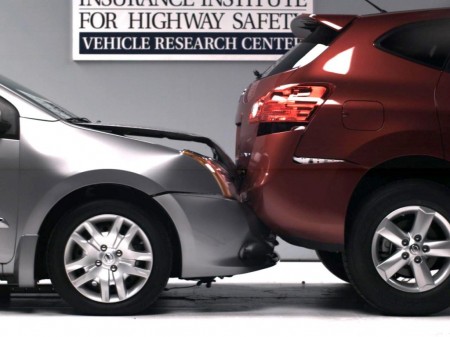
If you drive either a Civic or CR-V from Honda Salisbury, then you can rest easily at night knowing that your auto brand cares enough about your safety to pay special attention to your bumpers.  The Insurance Institute for Highway Safety took SUV and car pairs from seven different auto brands and put them in 10 mph fender benders with one another.  While we do not have results for the vehicles found at Chevrolet Dealer Medina, if they are anything like their domestic competition over at Ford then the results were costly and unattractive.  There are laws in place that require the bumpers on passenger cars to be between a height of 16 to 20 inches above the ground.  However, the SUVs, trucks, and minivans from Chevrolet Dealer Westlake and every other auto maker out there do not have any bumper height regulations in place. 

The IIHS tested these vehicle pairs so that one vehicle was standing still and the other one was traveling at only 10 mph.  The most expensive repair occurred when the Toyota Corolla sedan rear ended the Toyota RAV4 SUV; a total of $9,867.  The car sustained only $3,852 worth of damage while the SUV sustained $6,015 worth of damage.  This was because the car struck the spare tire on the back of the RAV4 rather than the bumper, and the spare tire is not designed to have that kind of force applied to it.  Bumpers actually do serve a purpose and their construction is meant to absorb impact so that the rest of the vehicle is not damaged. 

The other brands tested against each other were Ford, Honda, Nissan, Kia and Hyundai, Dodge and Jeep, and Volkswagen.  The two that had the best results were when the Honda CR-V rear ended the Honda Civic; a total of $2,995 damage resulted.  The other lowest cost repair was when the Kia Forte rear ended the Hyundai Tucson for a total repair bill of $3,601.  On average, the repair costs were higher when the car struck the SUV, and that is because there would be significant damage to the internal engine components of the car as it slid underneath the SUV. 


, , ,

Wednesday, December 8, 2010

2 Scariest Roads!


The cars at Gaithersburg Acura Dealers might be trendy and luxurious, but they sure won’t protect you in the event of a random accident on the road.  There are some scary places across the country to drive, and it doesn’t matter if that cute little Acura RL Woodside vehicle comes with all-wheel drive or not because some roads are just known for being dangerous.  The best advice you can get is to drive carefully and pay attention to your surroundings.  Then you can find great deals at Rhode Island Used Cars for your next purchase. 

The hands-down most scary place to drive is probably on U.S. 550 in Colorado between Silverton and Ouray.  This highway is known as the “Million Dollar Highway” and truck drivers have a united opinion that it is the most dangerous place to be driving in America.  The lanes are narrow, the road is twisty, and being high up in elevation adds to its treacherousness.  Winter time brings more than its fair share of avalanches and some of the hairpin turns do not even have guardrails to protect you from the steep cliffs and mountain passes.  If you can take an alternate route, it might be worth it!

On the opposite side of the country in Florida is U.S. Highway 19.  According to NBC and Dateline a few years back, this stretch of highway is the most dangerous in the entire country.  The main area to watch out for is the stretch between Pasco and Pinellas County.  The death toll was calculated for a five year period and it was found that 262 people were killed and a shocking 100 of those were pedestrians!  There really is no lesson to be learned here except that drivers need to be aware if they are coming into an area that is frequently dangerous or has accidents.  Pay attention to the road cautionary signs and drive extra safely if you are not familiar with an area. 


, ,

Tuesday, December 7, 2010

If You Don't Keep Up With Your Car Maintenance, Just Run It Into A Tree


Making sure that your car is in good shape, all of the time is not difficult. All it takes is preventive maintenance to avoid the hassle of taking it to a repair shop when the engine suddenly dies or the lights in the control panel light up. Bradenton Auto body staff would be more and happy to assist consumers with different tricks of the trade to maintain your car.

Peoria Volkswagen and Orillia Volkswagen encourage consumers to invest an little time in researching different tips for keeping car maintenance on an Volkswagen or any other vehicle.

Before going out for a drive, it is wise to check the brakes, the tires, the oil and the steering system to make sure that everything is normal.While driving the car, you hear a sound or noise that was not there before, take it to your mechanic or local repair shop to have it checked.

Have the mechanic check all the parts or the of the ignition system for usual nosie, for example: check the spark plugs as their condition is a very good indicator of how the engine is performing. They should be changed every 100,000 miles but there is no harm in checking them every 30,000 miles just to be sure that everything is alright.

The rotor and distributor cap are made up of plastic, which deteriorate over time due to wear and tear. To make sure that not causing any problems when starting the vehicle have them checked.

The filter acts as a deterrent against rust and other harmful objects that may disrupt the performance of your vehicle. There several filters such as those for oil or fuel. These filters should be checked frequently – about every 3,000 miles.

The car’s mileage can be checked by calculating the amount of fuel purchased and the miles driven as shown by the odometer before and after fueling. If there is a sudden change in the number of miles per gallon, be concerned and take the car to the repair shop for analysis.

In the event that the car’s sensor lights come on, pull the car over to the side of the road. Then call for help. There is a possibility that the problem can be remedied there or it may have to towed to a repair shop.

Even if a car come with better and smarter engines, the possibility of something going wrong is still there. By taking every precaution, the driver can get to the place where he wants to go safely.